
The Night She Forgot the Steps
I had a speech ready. She ate her toast instead.

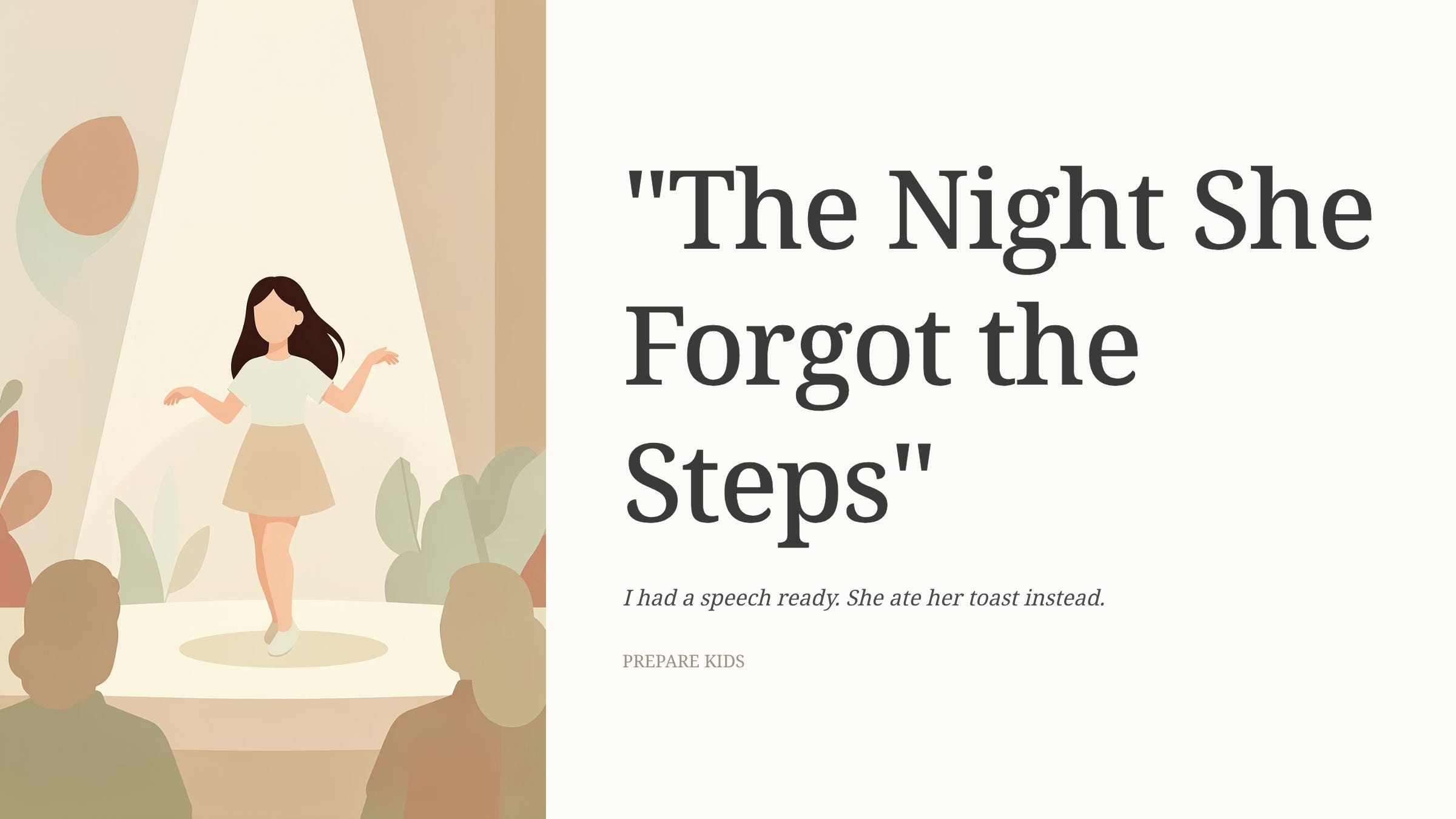
Six weeks.
That’s how long my daughter practised the routine. Every evening after dinner, the stretch of hallway outside her bedroom turned into a stage. I’d hear it through the wall — the same thirty seconds of music, over and over, and underneath it the soft thud of her feet finding the count.
She kept a notebook. The whole sequence written out in her own shorthand. Step touch, turn, arms up, hold. She carried it to school in her bag like it was something precious, because to her it was.
She’d turned eleven last month, and she wanted this more than she’d wanted anything in a long time.
If you’re a parent, you already know where this is going. You’ve felt the particular weight of watching your child want something that badly. The way their hope becomes your hope. The way you start, quietly, to want it as much as they do — maybe more.
The night of the recital I sat in the third row with my phone on silent. I watched her find her place in the line. She looked calm. Focused. Ready.
The music started.
And somewhere in the middle of the routine, she lost it.
Not dramatically. She didn’t fall. She didn’t freeze. But the count slipped, her arms went a beat behind, and for about four seconds she was doing something slightly different from the twelve other girls on either side of her.
Four seconds. In a thirty-second routine.
Long enough that she knew. Long enough that I felt it from the third row like a drop in air pressure — that lurch in your chest when you watch your child realise, in real time, in front of everyone, that it’s going wrong and there is absolutely nothing you can do about it.
You know that feeling. Every parent knows that feeling. The helplessness of the third row.
She found her way back. Finished the routine. Smiled for the bow.
In the car on the way home she was quiet. I didn’t say anything — though everything in me wanted to. We drove for a few minutes. Then she said, to the window more than to me: “I lost the count in the middle.”
“I know,” I said. “You found it again.”
She nodded. Kept looking out the window.
That was the whole conversation.
What happened next is the part I keep coming back to.
I braced for the morning after. I expected tears, or that flat grey mood that settles over a child after a public disappointment. I had a speech ready — I think most of us always have a speech ready — about how proud I was that she got up there at all.
I never got to give it.
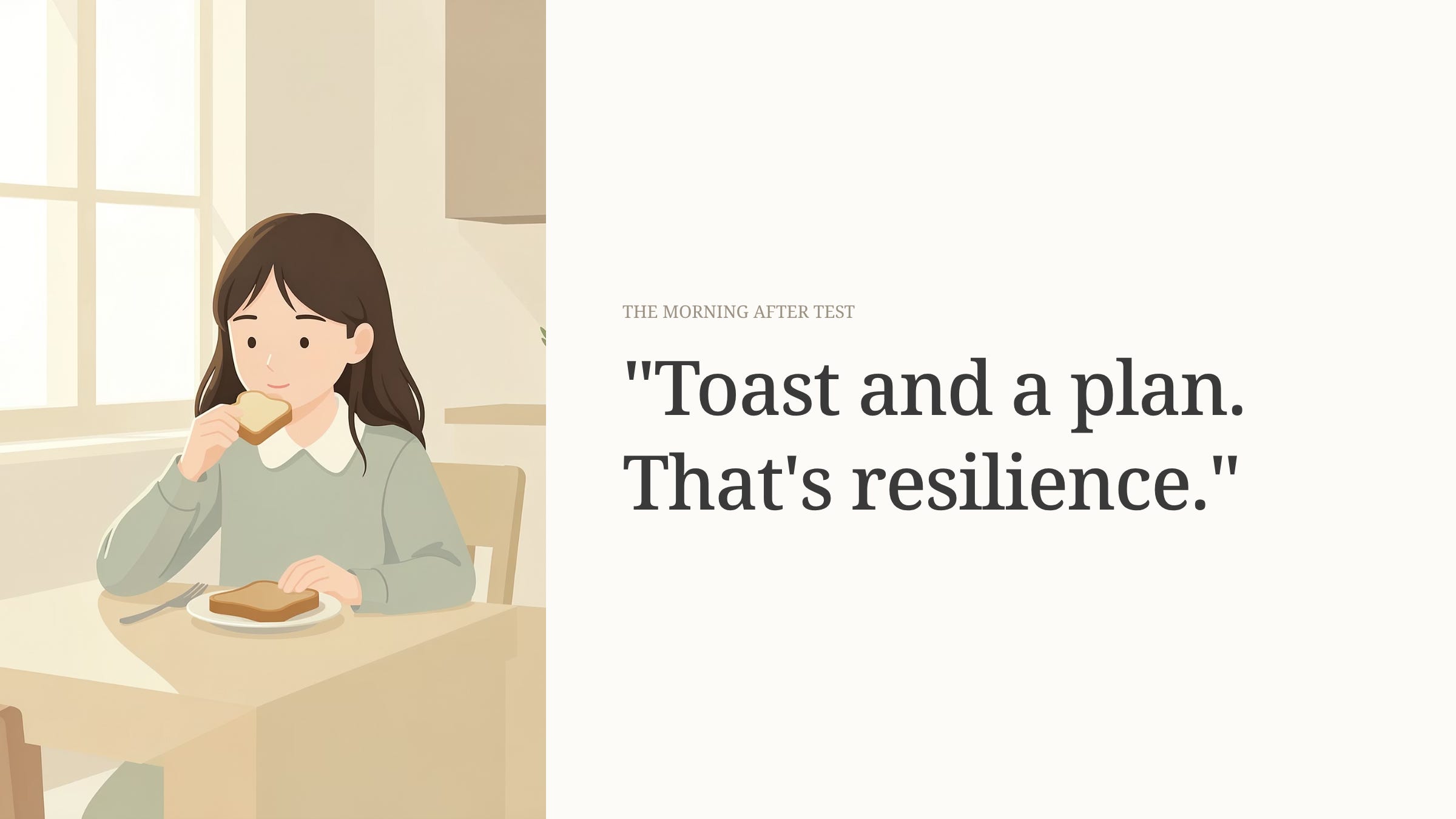
She came down for breakfast in her school uniform. Ate her toast. And somewhere between the first bite and the last, she mentioned — casually, like it was nothing — that she’d asked her dance teacher if she could run the routine one more time before next week’s class.
Not because I suggested it. Not because anyone pushed her. Because somewhere overnight, in the dark, on her own, she’d decided that the answer to a mistake in public was more practice in private.
I sat there with my untouched speech and watched her eat toast.
That decision — quiet, self-directed, made without a single word from me — is what resilience actually looks like from the inside.
Not the bounce. Not the brave smile at the bow.
The toast. And the ask to run it again.
Here’s what I think most of us get wrong.
We’ve been sold a dramatic version of resilience. The comeback. The standing back up after the knockdown. The triumphant second attempt set to swelling music.
But that’s resilience as performance. As something that happens on a stage, in a moment, where everyone can see it.
The real version is almost invisible. It doesn’t happen in the moment of the hard thing. It happens in the ordinary, unwatched hours afterwards — at a breakfast table, over toast, when no one is keeping score.
The Morning After Test is what I use now to read whether resilience is genuinely taking root in my kids. Not how they handle the moment — anyone can hold it together when people are watching and the adrenaline is up.
But what do they do the next morning?
Do they re-engage? Do they make a plan? Do they ask a question that shows they’re already quietly thinking about what comes next?
Or do they need me to carry them back to it?
The answer tells me more than anything that happened the night before. And if you watch for it, it’ll tell you the same about your own child.
The hardest part is what I had to do that morning. Which was nothing.
I didn’t suggest more practice. I didn’t say a word about the count, or watching a video, or going over it again. I didn’t over-process it in the car. I didn’t knock on her door before bed with one more reassurance she didn’t ask for.
I let the evening be what it was. I let her sleep on it. And I trusted — against every instinct I have as a parent — that she’d come out the other side without me reaching in to pull her there.
She did.
They almost always do, when we leave them enough room.
The toast, the plan, the ask to run it again — none of that was mine. I didn’t coach it. I didn’t engineer it with a perfectly timed conversation. She built it herself, overnight, out of materials I’ll never fully see and don’t need to.
And that’s the thing about resilience that took me the longest, and hurt the most, to understand:
You don’t build it in your children.
You just try, with everything you have, to get out of the way while they build it in themselves.
For a parent whose whole body is wired to step in — that’s the hardest thing there is.
Thursday’s post is about how to read the signs.
Three specific signals that tell you resilience is taking root in your child — not the loud, obvious ones, but the quiet ones that are easy to miss if you don’t know to look for them. And one signal that looks like resilience but isn’t: the performance of being fine that some children put on to manage our feelings rather than their own.
Before Thursday — think about your own child the morning after something hard. What do they actually do?
And what is it, do you think, that they need from you in that moment — that you might be giving them too much of?