
Why Tech Giants Are Keeping Their Kids Screen-Free (And What This Means for Your Family)

[Prefer Listening? Press Play]
[Like Reading? Scroll Down]
Picture this: The CEO who designed your child's favorite app doesn't let his own kids use it. The engineer who built the algorithm keeping millions glued to their screens sends her children to a school without computers. Sound crazy? It's happening right now in Silicon Valley, and it should make every parent pause and think.
You're probably wondering why the very people creating our digital world are so determined to keep their children away from it. Then you might ask yourself: What do they know that we don't?
The Shocking Reality Behind Silicon Valley's Best-Kept Secret
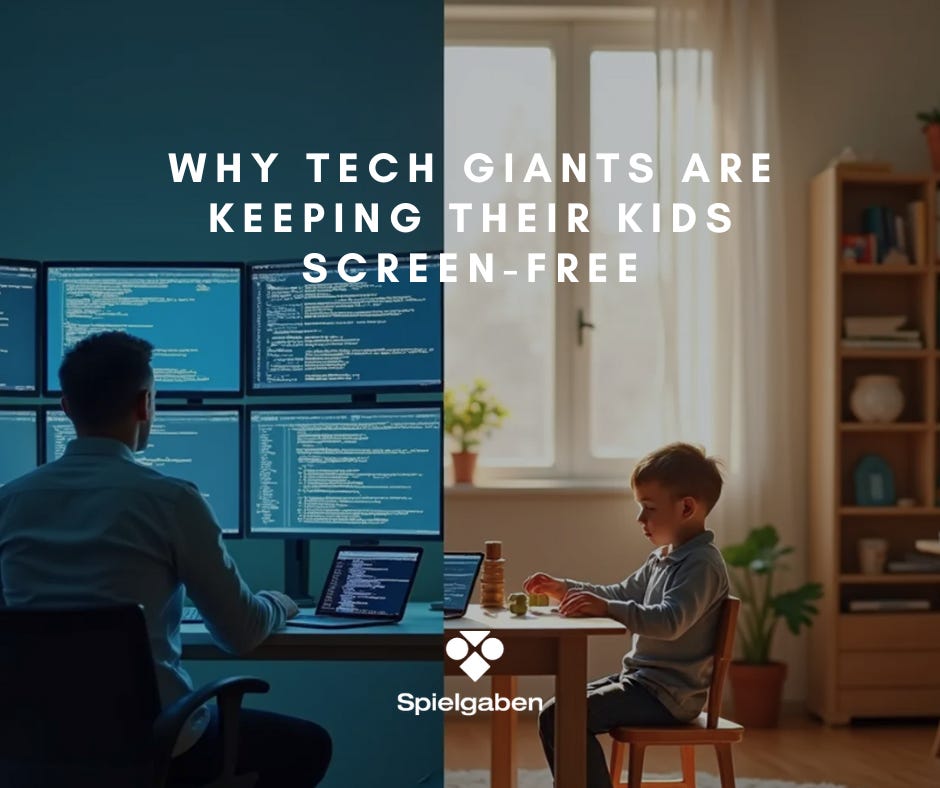
Here's what's really happening. Executives from Google, Apple, Microsoft, and Intel are quietly enrolling their children in Montessori, Froebel or Waldorf schools—institutions that deliberately ban computers and digital devices. But these aren't just any parents making this choice. These are the minds behind the technology that shapes our daily lives.
Pierre Laurent worked for both Microsoft and Intel. Then he made a startling admission: tech products are specifically designed to "hook users." Therefore, he believes most parents have no idea what they're actually handing their children when they pass over that tablet or smartphone.
Think about it. Your five-year-old isn't just playing games—they're being targeted by algorithms designed by some of the smartest people on the planet. But here's the kicker: those same brilliant minds don't want their own children anywhere near these products during their formative years.
What These Tech-Free Schools Actually Look Like
Walk into a Montessori or Waldorf classroom, and you'll see something remarkable. No glowing screens. No tablets propped on tiny desks. Instead, you'll find children knitting or using various intentionally designed wooden blocks—and secretly learning complex mathematical patterns through their fingers. Therefore, they're developing concentration, creativity, and problem-solving skills that go far deeper than any app could teach.
These schools operate on a simple but powerful principle. Children need to experience the world through their hands, their hearts, and their imagination before they encounter it through a screen. Then they can approach technology as confident, creative individuals rather than passive consumers.
The curriculum feels almost magical compared to traditional schooling. Students tell stories, paint with real brushes, and learn cursive writing with actual pens on paper. But this isn't about being old-fashioned—it's about building human skills that can't be automated or replicated by artificial intelligence.
* If there are no alternative education schools like these in your area, don’t worry — you can still bring their principles into your home. Spielgaben Educational Tools offer guided resources and learning materials to help you get started. *
The Terrifying Truth About What Screens Do to Developing Brains
Here's what should keep you awake at night. Globally, one in three internet users is under 18. In America, nearly 40% of children have social media accounts by age 12. Therefore, we're conducting a massive experiment on our children's developing brains—and we're only now beginning to understand the consequences.
The research is starting to paint a disturbing picture. Heavy technology use has been linked to rising teen suicide rates, addiction, anxiety, and the loss of basic social skills. But these aren't just statistics—they're our children's futures.
Monica Laurent, a Waldorf teacher and mother, puts it perfectly: technology isn't "forbidden fruit" in her household, but young children need to grow in an environment with less digital interference. Then they can develop the internal resources to handle technology wisely when they're older.
Think about your own relationship with your phone. How many times do you check it without thinking? Now imagine a developing brain—one that's still learning impulse control and emotional regulation—trying to navigate these deliberately addictive interfaces.
Why Your Child's "Soft Skills" Matter More Than You Think
Here's something that might surprise you. Ninety-one percent of CEOs globally say they need employees with stronger "soft skills"—empathy, confidence, communication, and teamwork. Therefore, while we're obsessing over whether our children can code, we might be missing the skills that will actually determine their success.
But traditional education isn't delivering these capabilities. Teachers spend 53% of their time on administrative tasks instead of actually teaching. Students sit passively at desks, memorizing information they could Google in seconds. Then we wonder why our children seem disengaged and uninspired.
Alternative schools like Waldorf, Montessori, Froebel and Reggio Emilia take a radically different approach. They believe children have "100 languages"—countless ways to express themselves and understand the world. Therefore, learning becomes an exploration rather than information consumption.
The Uncomfortable Questions We Need to Ask
Now comes the part that might make you uncomfortable. Are tech executives hypocrites for profiting from products they won't give their own children? Some critics compare them to "successful drug dealers who don't consume their own merchandise."
But here's a deeper question: Why do we accept this double standard? These parents have the financial luxury to provide tech-rich environments at home if they choose. Ninety-four percent of Waldorf graduates still attend college. Therefore, their tech literacy isn't the issue—their human development is the priority.
Meanwhile, public schools are increasingly pushing technology as the solution to educational challenges. Then we wonder why test scores aren't improving and children seem more anxious than ever.
What This Means for Your Family Right Now
So where does this leave you as a parent? You probably can't afford a private alternative educational tutor, and you might not want to abandon technology entirely. But you can learn from what these tech executives understand about child development.
First, recognize that the devices in your home aren't neutral tools—they're designed to capture and hold attention. Therefore, you need to be as intentional about your child's digital diet as you are about their food.
Second, prioritize hands-on experiences over screen-based learning, especially for younger children. Let them be bored sometimes. Then watch as they discover their own creativity and problem-solving abilities.
Third, focus on building the human skills that technology can't replace. Teach empathy through real conversations. Develop concentration through activities that require sustained attention. Foster creativity through unstructured play.
Building a Balanced Future for Your Children
The goal isn't to completely reject technology—that's neither practical nor beneficial in today's world. Instead, we need to help our children develop a healthy relationship with digital tools. Then they can use technology purposefully rather than being used by it.
This means delaying social media and smartphones as long as possible. It means creating tech-free zones and times in your home. Therefore, your children learn that they can exist and thrive without constant digital stimulation.
It also means advocating for better educational approaches in your local schools. Push for more hands-on learning, creativity-focused curricula, and social-emotional skill development. Then support teachers who are trying to build meaningful relationships with their students despite increasing administrative burdens.
And provide more hands-on, open-ended educational toys instead of digital toys so children learn through their hands, their hearts, and their imagination.
The Choice That Will Define Your Child's Future
Here's the bottom line: The people who understand technology best are choosing to limit their children's exposure to it during crucial developmental years. They're not anti-technology—they're pro-human development.
You have the same choice to make for your family. Will you hand your toddler a tablet because it's easier than engaging with them? Or will you follow the lead of the people who actually design these products and prioritize human connection, creativity, and real-world experiences?
The irony is stark but instructive. In our rush to prepare children for a digital future, we might be robbing them of the very human qualities that will make them successful in that future. Therefore, the most radical thing you can do as a parent might be the most traditional: Put down the devices, look your children in the eyes, and help them discover the world through their own curiosity and imagination.
Your children's ability to think critically, solve problems creatively, and connect meaningfully with other humans will determine their success far more than their ability to swipe, tap, or click. Then the question becomes: What kind of childhood are you going to give them?
The tech executives have made their choice. Now it's time to make yours.